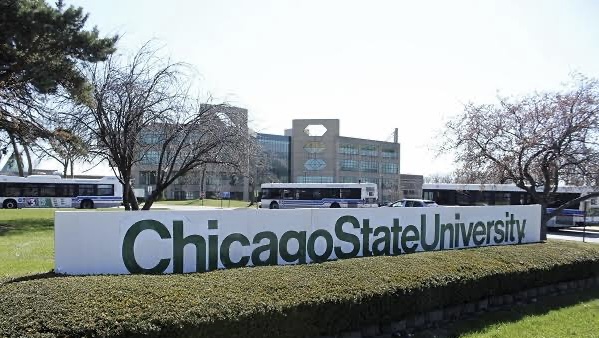
A United States-based law firm, Options Law Group, P.C., is preparing legal action to compel Chicago State University (CSU) to revoke President Bola Tinubu’s only academic certificate. The firm alleges the certificate was fraudulently obtained and is pushing for a court-ordered revocation through a legal tool known as a mandamus.
The controversy stems from Tinubu’s admission records at CSU. According to documents submitted in 1977, he claimed to have graduated from Government College, Lagos, in 1970. However, official records show the school did not exist until 1974, raising serious questions about the validity of his qualification. Tinubu later received a degree from CSU in 1979 based on those credentials.
Between March and April 2025, Options Law Group sent several letters to CSU demanding the certificate be withdrawn. The university reportedly ignored these letters. In response, the law firm has now finalized plans to take the matter to both state and federal courts.
A civic group, the Centre for Reform and Public Advocacy, is behind the legal move. Its director, Kalu Kalu Agu, a lawyer and associate of former Vice President Atiku Abubakar, insists the case is based on facts, not politics. He argues that Tinubu misrepresented key information during his application to CSU, which led to the issuance of a degree under false pretenses.
In one letter addressed to Illinois Attorney General Kwame Raoul, the firm stated:
“Our client has presented facts that would lead any reasonable person to conclude that Bola A. Tinubu misled Chicago State University in his application and obtained a degree based on false claims.”
In 2023, CSU admitted under oath that Tinubu did graduate from the institution. However, it could not confirm the authenticity of the certificate he submitted to Nigeria’s electoral commission, INEC. That document was at the center of a pre-election legal dispute initiated by Atiku Abubakar.
The new legal action shifts focus from the CSU certificate itself to the high school records used to gain admission to the university. If the court rules in favour of the law firm, Tinubu’s only recognized academic credential could be revoked.
American law supports such actions. In several past cases, U.S. courts have allowed universities to withdraw degrees found to be based on fraudulent information. A notable example is the 1987 case of Crook v. Baker, where the court ruled that degrees obtained through fraud undermine public trust in educational institutions.
There is precedent too. In 2020, the Texas Court of Appeals ruled in Trauth v. K.E. that academic dishonesty is grounds for revocation, as long as the accused receives a fair hearing.
The stakes are high for Tinubu. His CSU certificate was the only educational document he submitted to INEC for the 2023 elections. He claimed that his primary and secondary school certificates were lost during a military raid in the 1990s. However, there is no clear evidence that he reported this loss to the authorities at the time.
The Supreme Court of Nigeria did not fully address these certificate concerns during Atiku Abubakar’s post-election challenge. But with this U.S. legal action gaining traction, the issue could resurface ahead of the 2027 elections.
The presidency has responded with calm but firm opposition. Tinubu’s lawyer, Oluwole Afolabi, dismissed the lawsuit as “frivolous” and accused political opponents of rehashing old issues.
“The U.S. legal system does not tolerate baseless claims,” Afolabi said. “This matter has already been litigated. The Nigerian people have moved on.”
Despite this statement, sources within the presidency acknowledge that Tinubu is taking the legal threat seriously. The case has the potential to shape the narrative of his presidency and reelection bid.
About the Author